Understanding Watercolor Knitting Frames: A Practical Guide for Designers
In the realm of digital design and craft supplies, the choice of visual assets often dictates the emotional tone of a project. Watercolor Knitting Frames represent a specific niche where traditional artistic textures meet modern digital utility. These graphics are not merely decorative borders; they serve as foundational elements that can transform a standard layout into a cohesive, handcrafted aesthetic. For designers, scrapbookers, and small business owners, understanding the unique properties of these frames is essential for making informed decisions about their creative toolkit.
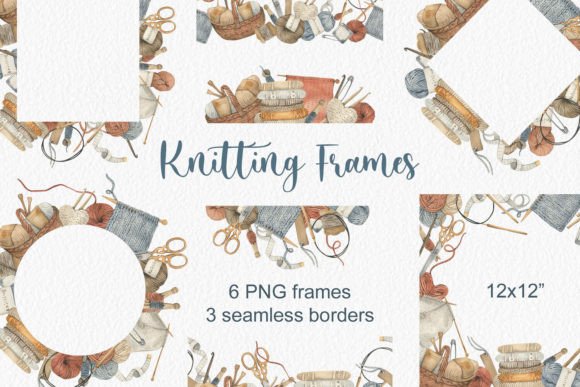
The appeal of watercolor textures lies in their organic imperfection. Unlike vector-based illustrations which offer crisp, scalable lines, watercolor art captures the fluidity of pigment on paper. When applied to knitting themes, this medium evokes warmth, nostalgia, and a sense of handmade care. A set of high-quality watercolor knitting frames and borders clipart typically includes distinct variations that allow for flexibility in design. For instance, a collection might feature six individual frames and three continuous borders, all rendered at high resolution to ensure clarity across different media.
Defining the Distinctive Qualities of Watercolor Textures
What makes Watercolor Knitting Frames distinct from other graphic resources is the interplay between the subject matter and the medium. Knitting itself is a tactile, textured activity, characterized by loops, stitches, and yarn fibers. Pairing this subject with a watercolor rendering enhances the perception of softness. The translucent layers of paint mimic the way light interacts with wool or cotton, creating a visual depth that flat colors cannot achieve.
From a technical standpoint, the quality of these assets is paramount. A professional-grade set will provide files in PNG format at 300 DPI (dots per inch). This resolution is critical because it ensures that the delicate brushstrokes and color gradients remain sharp when printed. A typical high-resolution frame might measure approximately 3600x3600 pixels. This size offers significant versatility, allowing users to crop, resize, or layer the image without encountering pixelation. In contrast, lower-resolution web graphics, often found at 72 DPI, would appear blurry or jagged when used for physical print products like greeting cards or invitations.
The inclusion of both frames and borders within a single resource package adds to its utility. Frames are designed to enclose content, drawing the eye inward, while borders act as dividers or page edges. Having a cohesive set of six frames and three borders ensures that a designer can maintain visual consistency throughout a multi-page document or a series of related products. This consistency is often harder to achieve when sourcing disparate images from different creators.
Comparing Digital Formats and Artistic Styles
When evaluating design resources, it is necessary to compare Watercolor Knitting Frames against alternative styles such as vector line art, photorealistic imagery, or solid geometric shapes. Each style serves a different purpose and appeals to a different audience demographic.
Vector vs. Watercolor: Vector graphics are defined by mathematical paths, making them infinitely scalable. They are ideal for logos, icons, and designs requiring precise, clean lines. However, vectors often lack the organic texture that defines the "handmade" look. If a project aims to convey a corporate or minimalist vibe, vector knitting patterns might be more appropriate. Conversely, if the goal is to evoke a cozy, artisanal atmosphere—such as for a boutique yarn shop or a family wedding invitation—the soft edges and color bleeding of watercolor frames are superior.
Photorealism vs. Illustration: Photorealistic images of knitting can sometimes feel too literal or cluttered for certain design layouts. They may compete with text or other graphical elements for attention. Watercolor knitting frames and borders clipart, being illustrative, abstract the subject just enough to function as a background or container without overwhelming the primary content. The artistic interpretation allows for color customization and easier integration into various color palettes.
Geometric vs. Organic: Modern design trends often favor geometric shapes and rigid grids. While effective for tech startups or contemporary brands, these styles can feel cold for lifestyle or craft-oriented projects. The irregular, flowing nature of watercolor frames introduces a human element that resonates with audiences seeking authenticity. This tradeoff is crucial: choosing watercolor means prioritizing emotion and texture over precision and rigidity.
Evaluating Use Cases and Application Scenarios
The versatility of high-resolution PNG files opens a wide array of applications. Because these assets are provided with transparent backgrounds, they can be layered over photos, solid colors, or other textures seamlessly. Here are several practical scenarios where Watercolor Knitting Frames prove particularly effective:
- Digital Scrapbooking: Enthusiasts often seek to preserve memories with a personal touch. Watercolor frames provide a gentle enclosure for photographs, enhancing the nostalgic feel of a digital album without obscuring the images.
- Event Invitations: For baby showers, bridal showers, or crafting workshops, these frames set an immediate tone of warmth and creativity. The soft hues of watercolor complement pastel color schemes often used in these events.
- Greeting Cards and Gift Tags: Small businesses selling handmade goods frequently use custom packaging. A border or frame featuring knitting motifs reinforces the brand identity of a craft-focused product line.
- Wall Art and Prints: At 300 DPI and 3600 pixels in dimension, these graphics are suitable for large-format printing. They can be used to create posters, nursery decor, or studio wall art that celebrates the art of fiber crafts.
- Web Design and Social Media: While web graphics usually require lower file sizes, high-resolution source files allow designers to downscale without losing quality. These frames work well as section dividers on websites or as overlays for Instagram posts promoting craft tutorials.
However, it is important to recognize situations where these frames might not be the best fit. For example, if a design requires a stark, high-contrast look for accessibility reasons, the subtle tones of watercolor might reduce readability. Similarly, if the target audience prefers a sleek, industrial aesthetic, the whimsical nature of watercolor knitting art could feel out of place.
Decision Factors: Choosing the Right Resource
When deciding whether to incorporate Watercolor Knitting Frames into a project, several factors should guide the evaluation process. First, consider the intended output medium. If the final product will be printed, the 300 DPI resolution is non-negotiable. Using low-resolution clipart for print can result in a loss of detail that undermines the perceived quality of the entire project. The specified size of 3600x3600 px provides ample room for cropping and adjusting aspect ratios without compromising the integrity of the image.
Second, evaluate the licensing and usage rights associated with the clipart. High-quality sets often come with clear terms regarding commercial use, ensuring that designers can safely use the assets for client work, merchandise, or marketing materials. Understanding these terms prevents legal complications and ensures ethical sourcing.
Third, assess the compatibility with existing brand guidelines. Does the color palette of the watercolor frames align with the brand's identity? Can the frames be adjusted or recolored to match specific requirements? While some watercolor assets are static, others may be part of a larger system that allows for slight modifications. Flexibility is key to integrating third-party graphics into a cohesive design strategy.
Finally, consider the time investment. Creating original watercolor artwork from scratch requires significant skill and time. Utilizing a pre-made set of high-quality frames allows designers to focus on layout, typography, and messaging rather than spending hours painting borders. This efficiency is a major advantage for professionals managing multiple projects or tight deadlines.
Conclusion on Strategic Implementation
Watercolor Knitting Frames offer a compelling solution for designers seeking to infuse their projects with warmth, texture, and a handmade aesthetic. By providing high-resolution, versatile assets in both frame and border formats, these resources bridge the gap between traditional art and digital application. While they may not suit every design brief—particularly those demanding strict minimalism or high-contrast functionality—they excel in contexts where emotion, nostalgia, and craftsmanship are central themes.
Ultimately, the decision to use these graphics should be driven by the specific goals of the project and the needs of the target audience. When selected thoughtfully, watercolor knitting frames and borders clipart can elevate a simple layout into a memorable visual experience, proving that the right artistic touch can make all the difference in effective communication.