Watercolor Gardening Clipart: A Practical Asset for Creative Workflows
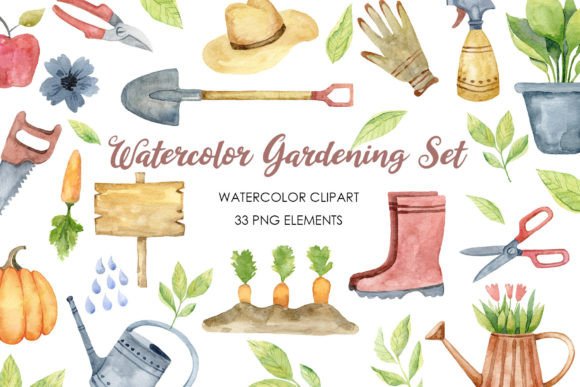
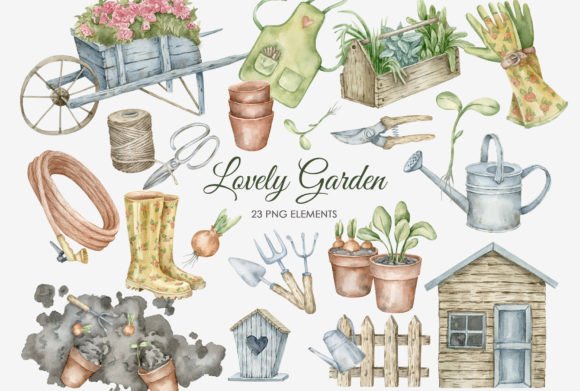
In the landscape of digital design, the choice of visual assets often dictates the tone, clarity, and emotional resonance of a final project. Watercolor Gardening Clipart represents more than just a collection of decorative images; it is a functional resource that bridges the gap between hand-crafted aesthetics and modern digital efficiency. For professionals ranging from graphic designers to small business owners, integrating high-quality botanical illustrations into a workflow requires an understanding of file specifications, compatibility, and strategic application. This set of 23 PNG elements offers a curated selection of hand-painted imagery designed to streamline the creative process while maintaining the organic charm of traditional watercolor techniques.
Understanding the Technical Foundation
Before implementing any visual asset into a production pipeline, it is essential to evaluate its technical specifications. The utility of Watercolor Gardening Clipart lies heavily in its format and resolution. Unlike standard JPEGs or low-resolution web graphics, this collection is provided in PNG format with a transparent background at 300 DPI (dots per inch). This specification is critical for versatility. A 300 DPI resolution ensures that the images retain crisp edges and vibrant color integrity when printed on physical media, such as posters, packaging, or textile fabrics. The RGB color mode further guarantees accurate representation across digital screens, making these files suitable for both screen-based marketing campaigns and print-on-demand services.
The inclusion of a transparent background significantly alters the workflow for designers. It eliminates the need for time-consuming masking or background removal processes in software like Adobe Photoshop or Illustrator. When a designer downloads these 23 graphic elements, they can immediately layer them over complex backgrounds, textured paper scans, or solid color fields without dealing with unsightly white borders. This "plug-and-play" capability reduces friction in the early stages of a project, allowing creators to focus on composition and layout rather than technical cleanup.
Integration into Professional Design Workflows
For professionals in the marketing and branding sectors, the integration of Watercolor Gardening Clipart serves specific strategic purposes. In the context of logo design, these hand-painted elements can provide a unique identity for eco-friendly brands, gardening centers, or wellness products. The organic texture of watercolor conveys authenticity and care, qualities that resonate deeply with consumers seeking natural solutions. When developing a brand identity, a designer might use a single floral element from the set as a central icon, scaling it up for a logo mark while using smaller variations for social media avatars or email signatures.
In the realm of promotional materials, consistency is key. Using a cohesive set of 23 elements allows a team to maintain visual uniformity across various touchpoints. For instance, a marketing campaign for a spring event could utilize different flowers and leaves from the same collection to create a series of flyers, banners, and social media posts. Because the color palette and brushstroke style are consistent across all 23 files, the resulting collateral feels unified and professionally executed. This approach saves time during the planning phase, as there is no need to source disparate images that might clash stylistically.
Workflow Examples for Print and Digital Media
- Event Projects: For wedding planners or event organizers, these clipart elements can be used to create custom invitations, programs, and signage. The soft, romantic aesthetic of watercolor complements garden-themed events perfectly. Designers can overlay these PNGs onto kraft paper textures or pastel gradients to create sophisticated stationery.
- Textile Industry: Fashion designers and fabric printers can utilize the high-resolution nature of these files to create repeating patterns for scarves, tote bags, or home decor linens. The 300 DPI quality ensures that when the pattern is tiled and printed on large rolls of fabric, the details remain sharp and the colors do not bleed.
- Web Design: Web developers can incorporate these elements as subtle background accents, section dividers, or loading icons. The transparency allows these graphics to blend seamlessly with website layouts, adding a touch of elegance without overwhelming the user interface or slowing down page load times due to excessive file bloat.
Strategic Use in Personal and Hobbyist Contexts
Beyond professional applications, Watercolor Gardening Clipart holds significant value for hobbyists, scrapbookers, and educators. In the world of digital scrapbooking, the ability to mix and match 23 distinct elements provides endless possibilities for storytelling. Users can arrange flowers, leaves, and stems around photographs to create personalized memory pages that reflect the season or theme of the event being documented. The high quality of the images ensures that even when printed on heavy cardstock for physical albums, the artwork looks professional rather than pixelated.
Educators and content creators also benefit from these resources. Teachers creating lesson plans about botany, seasons, or art history can use these illustrations to make learning materials more engaging. The realistic yet artistic style helps students visualize plant structures without the sterility of scientific diagrams. Similarly, bloggers focusing on lifestyle, gardening, or DIY projects can enhance their articles with custom headers and inline graphics that align with their personal brand, avoiding the generic look of stock photography.
Optimizing Organization and Long-Term Usability
To maximize the efficiency of using this asset pack, proper organization is paramount. Upon downloading the files, it is advisable to establish a clear folder structure within your digital asset management system. Grouping the 23 elements by type—such as flowers, foliage, or full compositions—can speed up the retrieval process during future projects. Renaming files descriptively (e.g., "watercolor-rose-bud.png" instead of "img_001.png") further enhances usability, especially when working in collaborative environments where multiple team members may access the library.
Compatibility with other tools is another factor to consider. Since these are PNG files, they are universally compatible with most design software, including Adobe Creative Cloud, Canva, GIMP, and Microsoft Office. However, for advanced manipulation, importing the PNGs into vector-based software allows for non-destructive editing. While the files themselves are raster images, they can be traced or used as reference layers to create scalable vector versions if a project demands extreme resizing beyond the original dimensions. Understanding the limitations and strengths of the file format ensures that users do not encounter unexpected issues during the execution phase of their projects.
Quality Control and Consistency Checks
Maintaining quality control is essential when deploying these assets across different mediums. Before finalizing a print job, always review the proof at 100% zoom to ensure the 300 DPI resolution translates correctly to the intended size. Check for any compression artifacts or color shifts that might occur during the conversion from RGB to CMYK for printing. While the source files are high quality, the output depends heavily on the printer and substrate used. Testing a small batch of stickers or a sample sheet of packaging material can prevent costly errors in large-scale production runs.
Conclusion on Implementation
The decision to incorporate Watercolor Gardening Clipart into a creative workflow is a decision to prioritize quality, versatility, and aesthetic coherence. With 23 high-resolution, transparent PNG elements, this set provides a robust toolkit for a wide array of applications, from professional branding and marketing to personal crafting and education. By understanding the technical specifications and strategically planning how these assets fit into broader project goals, users can achieve professional results with greater efficiency. Whether designing a logo, planning an event, or creating educational content, the flexibility of these hand-painted illustrations supports a seamless transition from concept to completion, ensuring that the final output is both visually stunning and functionally effective.